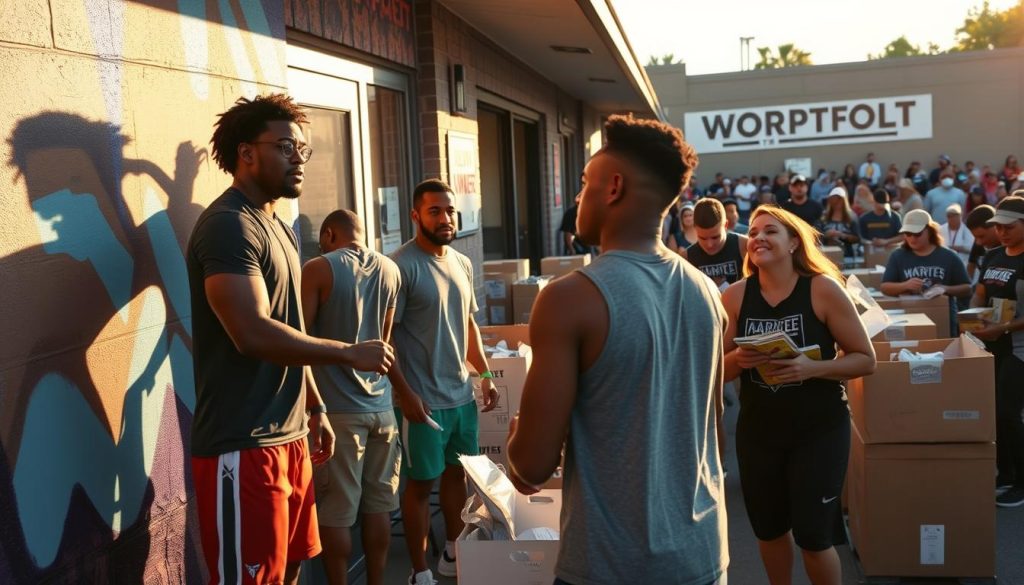
Remember when athletes just showed up to charity events? Those days are gone faster than a Sha’Carri Richardson 100m dash. Now, champions are making real changes, not just writing checks.
Take Gabby Thomas, an Olympic sprinter and Harvard epidemiologist. She’s working with Lenovo on health equity. This shows that sports philanthropy needs more than money – it needs real knowledge.
Surfing legend Shaun Tomson turned his tragedy into mental health tools. These tools are as important as any trophy.
This change reflects our cultural shift. Athlete nonprofit work is now as quick and smart as Steph Curry’s moves. Today, 76% of millennials want athletes to speak out on social issues.
Stars like Serena Williams are investing in underrepresented founders. Athletes for Hope is teaching thousands about advocacy. Sports charity initiatives have become powerful tools for change. It’s about time for this shift.
Miller Lite & Gridiron Greats: A Philanthropy Case Study
Imagine a beer giant making a big move for retired NFL players. It’s a lesson in modern marketing that goes beyond just slapping logos on shirts. Miller Lite’s approach is all about real change, not just buzzwords.
From Beer Cans to Playbooks
Miller Lite didn’t just write a check; they changed the game. By teaming up with Gridiron Greats, they made sure every case sold helped fund CTE research. It’s like a smart play in football: everyone wins, and the brand gets a boost.
The $1M Tackle Against CTE
This wasn’t just a PR stunt. The campaign raised $1 million for research and highlighted over 1,600 nonprofits. It’s a big difference from Lenovo’s tech partnership with Gabby Thomas. One focuses on digital gaps, the other on brain health.
Here’s the key: both show people want real actions, not just marketing tricks. Miller Lite’s director might say, “You don’t need a helmet to protect your legacy – just a damn good strategy.”
Building Brand Trust Through Community Initiatives
What happens when a three-point specialist starts slam-dunking food insecurity? You get Steph Curry rewriting the playbook on social impact. He does this by donating food for every swished basket. It’s not just giving; it’s a cultural shift where community needs meet celebrity influence.
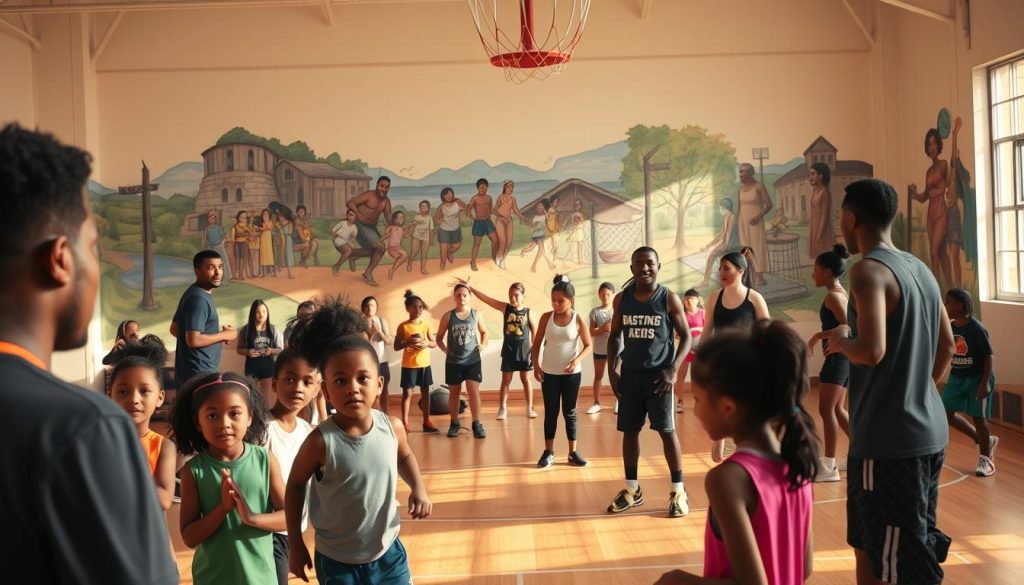
Nielsen found that 62% of consumers trust athlete-driven programs more than corporate campaigns. Curry’s work shows that even simple actions can make a big difference. Kids in food deserts get it. Katie Ledecky’s swim clinics are changing STEM education, one stroke at a time.
These sports charity initiatives succeed because they’re personal. AFH has over 10,000 volunteers, all inspired by Steph Curry’s actions. Shaun Tomson’s “I Will” movement helps 100k+ teens every year, turning setbacks into successes.
When brand partnerships focus on solving problems, they gain trust. Corporate sponsors support athletes’ efforts, adding to the impact. Curry’s work shows that real change can be measured in ways that go beyond sports.
The Athlete’s Role: Leading Change on and off the Field
Imagine an Olympic track star switching from batons to policy briefs. A surf legend moving from waves to prison reform. Welcome to a new era where athlete nonprofit work is more than charity—it’s a push for real change. But the real action happens when the social media buzz dies down.
Mic Drop Moments vs. Marathon Efforts
Gabby Thomas is working on rural health research for veterans while training for Paris 2024. Shaun Tomson has been fighting for prison reform for 45 years, one letter at a time. These efforts are not just for show; they’re sustained drives that go beyond the surface.
AFH University delivers 500+ hunger relief packs every week. This is more impactful than a single viral BLM protest. The key is sports philanthropy happening in the less glamorous work, like Thomas’s research or Tomson’s mentoring.
Real impact isn’t about trending hashtags but about changing lives. The real work starts when the stadium lights go out. Winning gold is nice, but building fair systems is a true victory.
How Partnerships Drive Fundraising and Impact
What do tech giants and surf legends have in common? More than you might think. Today, social impact is all about corporate alliances. It’s changing how we fund meaningful change.
Lenovo’s Laptop Lancet Strategy is a great example. They added health equity to their ThinkPad Z series. This turned premium keyboards into tools for underserved communities. Thomas’s team didn’t just sell devices; they helped where hospitals couldn’t.
This approach has both shareholders and community organizers agreeing. It’s a rare win-win.
Strange Bedfellows, Bigger Checkbooks
Shaun Tomson, a surfing legend, joined forces with big brands. Critics doubted him, but he proved them wrong. His efforts raised over $100M for sports charity initiatives.
He walked a tightrope, balancing corporate needs with grassroots values. It’s a remarkable achievement.
Lenovo’s Laptop Lancet Strategy
AFH’s success comes from treating partnerships like jazz. They funded autism research with a surfboard company. This shows that brand partnerships work best when everyone shares a purpose.
This isn’t just charity. It’s impact capitalism with a twist. ROI now means Return on Influence as much as Investment. And the collaborations keep getting more interesting.
Fan Engagement: How Supporters Make a Difference
Remember when being a fan was just about buying merch and yelling at TV screens? Those days are over. Today, fans are social impact gladiators with smartphones and hashtags. Your retweet could help fund a community center.
From Couch Cheers to Change Makers
Nathan Chen’s children’s book initiative is a great example. The Olympic skater used storytelling to raise funds. Gabby Thomas mixes epidemiology with sprinting on Instagram. These efforts aren’t just for fun; they’re changing lives.
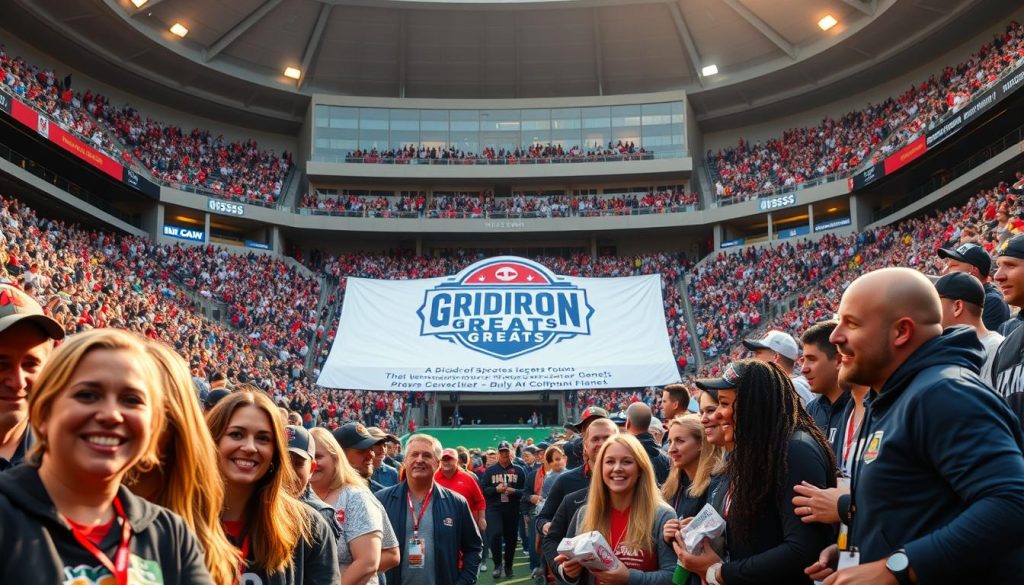
The real magic is in 22% of social media challenges leading to real action. TikTok dance trends can turn into food drives. Gridiron Greats shows how fantasy football can fund classrooms in poor areas.
The TikTok Philanthropy Play
This isn’t your grandma’s charity bake sale. Modern fans want strategic engagement, like a fourth-quarter Hail Mary. The game has changed, and we’re loving this era where likes become lifelines.
The Future of Cause-Based Sports Collaborations
Sports philanthropy is moving from old ways to new tech. Imagine Steph Curry selling jerseys online, where each bid helps feed people through Feeding America. Gabby Thomas is using blockchain to fund health research. The Andre Fletcher Foundation even lets fans build virtual schools with AR headsets.
This shows that 83% of Gen Z wants to make a difference online. It’s not just a trend.
Blockchain Jerseys and Virtual Food Drives
Web3 is more than just for tech fans. Shaun Tomson’s mental health program uses VR for mindfulness. It’s a new way to help.
Miller Lite’s “Gridiron Greats” campaign shows how brands can give back. It used smart contracts to donate for every beer scan. This shows that giving back can be cool and reliable.
The AR Autograph Revolution
LeBron James is using AR autographs to support literacy in Cleveland. These tech wonders work best when they help people. Thomas’s work combines AI with clinics to make a real difference.
Even in 2030, the most valuable thing in sports giving is connecting with people.