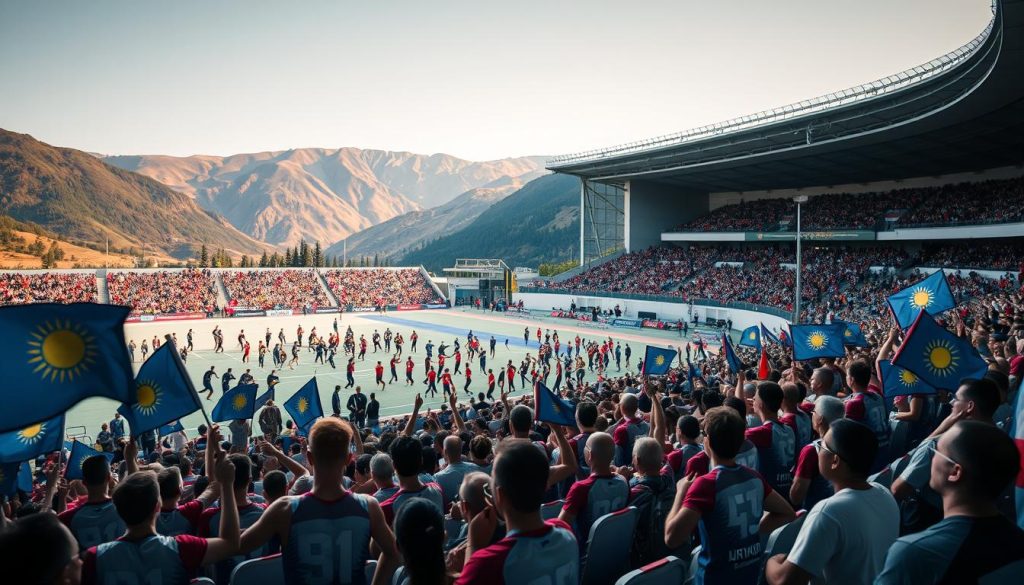
How does a nation that barely existed on world maps suddenly produce world-class athletes? Kosovo’s journey is like a geopolitical thriller. Every victory comes with an asterisk.
Imagine wearing your national colors and getting disqualified. Picture Olympic dreams hanging on diplomatic chess moves, not athletic performance. This was reality for Kosovo’s athletes.
After decades of isolation, young Kosovans showed “buzzing activity” across fields and stadiums. They weren’t just chasing medals. They carried a nation’s identity on their shoulders.
The case of judo champion Majlinda Kelmendi fighting for Olympic participation perfectly embodies this struggle. Her battle wasn’t just against opponents on the mat. It was against global politics.
This isn’t just about sports diplomacy. It’s about a country using athletic achievement as its passport to global acceptance. As detailed in this analysis of Kosovo’s international recognition, every victory became a diplomatic breakthrough.
From conflict’s ashes emerged athletes who turned playing fields into proving grounds. Their story reveals how Kosovo sports recognition became about more than medals. It became about existence itself.
Political Obstacles in Gaining International Acceptance
Imagine training your whole life for the Olympics, only to find out many don’t think your country exists. This is Kosovo’s reality. Every game is a political battle, and every jersey has a story.
108 nations see Kosovo as a country, but 85 stay silent. This makes athletes carry more political weight than their sports achievements.
Role of International Federations and Sporting Bodies
International sports groups have become like the United Nations. They decide who can play based on politics, not talent. FIFA and the IOC act like diplomats, not just sports leaders.
The G20 shows the harsh side of international politics. Eleven members, mostly Western countries, recognize Kosovo. But eight, including China and Russia, don’t. This makes getting visas a political act.
Here’s how the recognition landscape looks among global power players:
| G20 Nations Recognizing Kosovo | G20 Nations Not Recognizing | Key Sporting Impacts |
|---|---|---|
| United States, UK, Germany | China, Russia, India | Olympic participation challenges |
| France, Japan, Australia | Brazil, Argentina, Mexico | World Championship eligibility |
| Canada, South Korea, Turkey | Indonesia, South Africa | Qualifying event restrictions |
| Saudi Arabia, Italy | – | Diplomatic visa complications |
European Parliament wants the IOC to accept Kosovar athletes. But sports groups say they’re neutral while making political choices. This hurts athletes’ careers.
Kosovo teaches us about dealing with international red tape. Their story shows that the biggest challenges are often in politics, not sports.
The real tragedy is that while politicians argue, athletes lose their chance to compete. Their Olympic dreams are caught in the middle of political games.
Athlete Stories: Competing Without a Flag
Imagine training your whole life for the Olympics, only to find out your country isn’t recognized. For Kosovan athletes, this was their reality. They became athletes without a country, competing for visas instead of national pride.
Some athletes checked Wikipedia before big games, hoping their country would be recognized. This caused a lot of stress. Sadly, over 30% of Switzerland’s Olympic soccer team were Kosovan players. They were playing for a country that wasn’t their own.
The Influence of Diplomatic Partnerships and Policy
Sports diplomacy is using sports to gain political points. Kosovo’s close ties with the U.S. were their secret weapon. American support was like having the world’s strongest cheerleaders.
Artists like Petrit Çeku played a big role too. The Kosovo-born Croatian guitarist was not just playing music. He was also changing how people saw Kosovo. It’s like being a court artist, but instead of pleasing the Medicis, he was influencing FIFA.
This story shows how policy and partnerships can open doors for athletes. Without a recognized passport, athletes need diplomatic help. It’s a lesson in how soft power can change the game.
Strategies for Raising Kosovo’s Profile in Sport
Kosovo treated sports like a game of international politics. Their strategy is a must-read for any new nation wanting to make a mark. It was all about playing smart, not just hard.
Like the underdog in a classic movie, Kosovo used clever tactics to win. They started small, built up, and made every win count. Getting 116 UN recognitions was no accident; it was a result of their strategic moves.
Lessons for Emerging Sporting Nations
Kosovo’s four-pillar strategy is a lesson in building a nation through sports:
- Athletic excellence as political capital: Majlinda Kelmendi’s judo gold medals were more than wins. They were statements of Kosovo’s place in the world.
- Diaspora networks as diplomatic channels: The Kosovan-Swiss football connection showed how sports can overcome political barriers.
- Cultural diplomacy as soft power: Rita Ora’s music career was an unexpected boost for Kosovo’s image.
- Strategic multilateral engagement: The Brussels agreements set the stage for Kosovo’s recognition.
This strategy shows how sports can be used as political leverage. It’s not just about winning. It’s about what those wins mean globally.
Kosovo’s genius was turning sports wins into diplomatic wins. When an athlete wins, their country’s legitimacy is clear. Such moments can change the game in international politics.
For other nations, the message is clear: show your strength through consistent success. This approach, as seen in sport-driven nation-building, creates undeniable facts before seeking recognition.
Kosovo’s story teaches that in international politics, sometimes the strongest statements are made on sports fields. The next generation of nations should study this strategy. A well-planned game can change more than just scores.
The Ongoing Challenges and Future Prospects
Just when you thought this geopolitical drama had reached its final act, the curtain rises on another scene of diplomatic theater. The 2020 agreement created a sporting cease-fire. It was a one-year truce where Kosovo couldn’t seek new international memberships. Serbia paused its campaign to get countries to withdraw recognition.
The current landscape is a patchwork quilt of recognition. Kosovo sits in some international federations but remains outside others. It’s welcomed by some sporting bodies but barred from entering others.
Current Status of Sporting Recognition
The February 2023 normalization agreement brought another twist to this already convoluted plot. Serbia technically agreed not to oppose Kosovo’s international membership. But the implementation has been characteristically Balkan in its complexity.
So where does this leave Kosovo sports recognition today? In a state of cautious optimism surrounded by diplomatic landmines. The country has made significant strides but faces hurdles that would make an Olympic hurdler sweat.
| Sporting Body | Recognition Status | Key Restrictions | Impact on Athletes |
|---|---|---|---|
| International Olympic Committee | Full Member (2014) | None | Can compete under Kosovo flag |
| UEFA | Provisional Member (2016) | Cannot play against Serbian teams | Limited competition opportunities |
| FIFA | Full Member (2016) | Home games require neutral venues | No true home advantage |
| International Tennis Federation | Not Recognized | Cannot represent Kosovo | Must compete as neutrals |
This table shows the uneven playing field that defines Kosovo’s sporting reality. Some federations embrace them, others keep them at arm’s length, and a few treat them like diplomatic pariahs.
The future prospects? They’re as unpredictable as a penalty shootout in a thunderstorm. The path forward depends on continued sports diplomacy and geopolitical developments. What’s clear is that in international sports politics, the final whistle never really blows—the game just moves to different arenas with different rules.
For emerging nations watching this unfold, Kosovo’s journey offers a masterclass in patience, persistence, and the art of turning athletic achievement into political currency. The lesson here isn’t about winning medals—it’s about winning recognition one sport, one federation, one competition at a time.
The Cultural Dimension of Sporting Recognition
Sports were a big part of Kosovo’s diplomacy, but the real battle was in culture. While athletes faced political walls, artists found a way around them. They did this through “recognition by osmosis.”
This cultural approach was simple. If people loved your art, they might start to care about your country. It’s like winning someone over with your cooking.
Beyond Athletics: Music and Arts as Diplomatic Tools
Rona Nishliu’s Eurovision performance for Albania was a big deal. She sang about Kosovo to millions of Europeans. People loved her voice, not her politics.
Rita Ora’s music also made a big splash. Her hits made people search for “Where is Prishtina?” Her songs taught geography in a fun way.
The British Council’s support for Kosovo’s arts was not just funding. It was a way to promote Kosovo through music. Petrit Çeku’s guitar played Kosovo’s story, one note at a time.
Cultural diplomacy is powerful because it skips over politics. While sports debated Kosovo’s status, artists just performed. No flags needed, just talent.
| Diplomatic Approach | Political Barriers | Emotional Impact | Recognition Speed |
|---|---|---|---|
| Sports Diplomacy | High ( IOC requirements) | National pride | Slow, formal |
| Cultural Diplomacy | Low (art transcends politics) | Personal connection | Rapid, organic |
| Traditional Diplomacy | Very High (state recognition) | Institutional | Very slow |
The table shows why culture worked when sports and politics didn’t. Art creates personal connections that politics can’t. People remember Rita Ora’s country because they connect with her music.
Kosovo’s story teaches emerging sporting nations a lesson. Don’t rely only on sports for diplomacy. Cultural recognition can do more than official channels.
In international politics, sometimes a song does more than a diplomatic message. Kosovo’s artists showed that cultural resonance can build recognition faster than politics.
This mix of sports and culture offers a blueprint for sporting nations seeking acceptance. People might forget the medal winner, but they remember the song that moved them.
Conclusion: The Geopolitics of Sporting Sovereignty
So, what’s the final score in this game of geopolitical football? Kosovo’s journey teaches us that getting sports recognition is key. It’s not just a sweet treat after gaining sovereignty; it’s a sign you’re accepted.
What Kosovo’s Journey Teaches Us About International Recognition
The OSCE’s findings are clear: people first want law, order, and education. You can’t think about Olympic goals when safety is a big worry. But there’s more to it.
The NewDiplomat shows us that Kosovans want to be part of global sports and culture. They want to make a difference, not just get recognized.
Kosovo’s sports recognition is truly interesting. They used sports to make a strong impact internationally. Winning gold medals was more important than getting political support.
For new nations, Kosovo’s plan is clear. Start with sports success, then use it to influence culture. This leads to diplomatic recognition. It’s a long-term strategy, but it’s worth it.
Kosovo’s story shows that sports can be a powerful tool for diplomacy. It’s not just about talking; it’s about showing your worth through achievements.